
Image
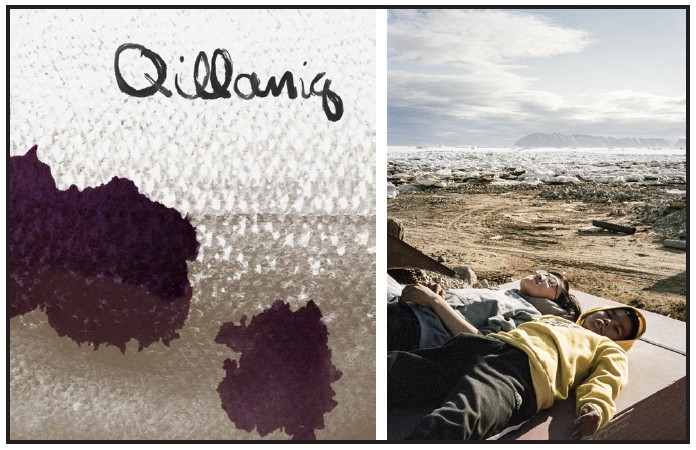
Image Caption
Windspeaker.com Books Feature Writer
Local Journalism Initiative Reporter
Qillaniq, the largest contemporary circumpolar Indigenous exhibition in the world, launched in Ottawa June 12 and will long be remembered through a book of the same name.
“A book lives well beyond the exhibition,” said Taqralik Partridge, one of six members of the all-circumpolar curatorial team for Qillaniq at the National Gallery of Canada and one of 24 people included in the book.
Contributors for both the book and exhibition are from the circumpolar world — Alaska, Inuit Nunangat, Kalaallit Nunaat, and Sápmi.
Qillaniq is the Inuktitut word describing “how light from the sun or the moon shimmers brightly when reflecting on the water.”
The themes of the exhibition, which include love, connection, identity, community, struggle, sadness, climate change and geopolitics, are carried through in the book.
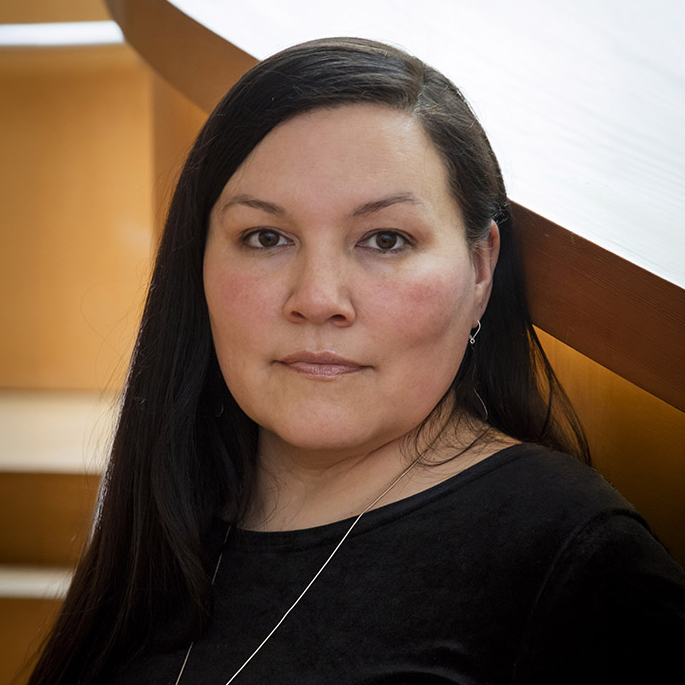
“I think I approach everything that I do with the same lens,” said Partridge, who is a spoken word poetry performance artist, magazine writer, and visual artist. “I really want to amplify the voices of Indigenous artists and community members. I think that that's what I do in my own creative work, but also in (my) curatorial work.”
The curatorial group, she adds, wanted to include artists who “actually challenged their own communities as well as the world at large.”
Work that shows a clear vision is also important to Partridge, who is Inuk and Scottish and lives in Ottawa.
In her contribution to the book, Partridge reflects on the moment she is in as an artist and a curator.
“One thing that really came to mind was over the urgency of the climate crisis that we're in,” she said. “It was just really a reflection on that and having to do with this exhibition with these artists who speak so clearly with their own voices.”
Climate change was raised by many of the book’s contributors, including young climate activists Carmen Kuptana and Eriel Lugt, who Partridge interviewed.
“It’s important to have them because…they're from Tuktoyaktuk (NWT) and the North is really always the place where climate change or any kind of environmental challenges that the world experiences, it becomes very apparent in the North before it happens in the south of Canada,” said Partridge.
In Partridge’s interview, Kuptana said, “We need to protect our lands and waters to ensure the next generation have the opportunity of learning our traditions, harvests and learning to love the land.”
Co-curator Jocelyn Piirainen, who is Inuk from Nunavummiuq and now lives in Ottawa, wrote, “With the reality of globalization, the works exhibited in Qillaniq demonstrate extraordinary resilience and instil a sense of connection that is stronger than ever.”
Among the book contributors is Mary Simon, an Inuk woman who recently finished her term as the first Indigenous governor general of Canada. In her essay, “The Zen of Blueberry Picking!”, Simon talks about leaving behind “the hustle and bustle world around me and escap(ing) political issues, organizational or business crises, even family distractions. This is my time, in my place and the serenity I draw from this experience begins long before I begin gathering up my mosquito netting, repellent and berry buckets.”
The book contains prose, essays and poems, as well as newly commissioned pieces and reproductions of work by nearly 70 northern artists. Works from each of the curators are also included.
“As Indigenous peoples, we inherently create art with a disciplinary lens, multidisciplinary practice, and the Qillaniq catalogue reflects that through words of connectedness, subsistence, activism, climate change, and expanding traditions and queerness,” said Renaltta Arluk, senior manager of Policy, Protocols, and Strategic Initiatives of the National Gallery of Canada.
The gallery held a media preview event last week for the exhibition and the book.
“(These are) artists that do not shy away from looking away from or looking at historic injustices,” said Jean-François Bélisle, director and CEO of the National Gallery of Canada. “Qillaniq affirms that Northern art is shaped not only by the past, but also by imagination, resilience, and creative voices.”
Qillaniq exhibition runs from June 12 to Sept. 20.
“There are plans for (the exhibition) to tour and we want as many people to come see it as possible because it is very different to see things in person. At the same time, a book can last forever. And we also included commissioned writers and other creative work in there to make sure that people get a feel for the exhibition well beyond the actual on-site life of the exhibition,” said Partridge.
Qillaniq was released June 12 and can be purchased at https://gooselane.com/products/qillaniq