
Image
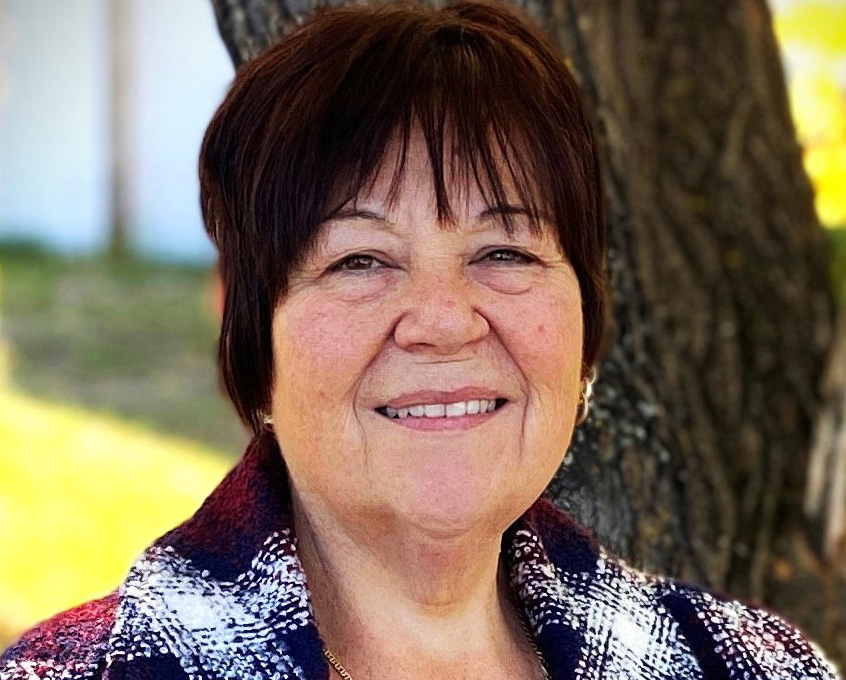
Image Caption
Local Journalism Initiative Reporter
Windspeaker.com
Tina Rasmussen, CEO of Meadow Lake Tribal Council (MLTC) Industrial Investments, is excited about the future benefits that will accrue to First Nations from a new wind energy project in Saskatchewan, which was officially announced on June 15 at a celebratory sod turning ceremony.
The Rose Valley Wind project is comprised of 28 wind turbines. M Squared Renewables, a development corporation owned by the nine Nations of the MLTC, as well as the Mistawasis Nêhiyawak First Nation, will hold majority ownership.
The Canada Infrastructure Bank (CIB) reached an agreement to loan more than $160 million for the project, located near the town of Assiniboia in the Rural Municipality of Excel No. 71. Once completed, the 210 MW project will generate enough electricity to power about 100,000 homes in the province.
The funding was provided to M Squared Renewables and to Potentia Renewables, a Toronto-based company that operates other renewable energy facilities.
“For the nine Nations of the Meadow Lake Tribal Council, this is unlike some of their other businesses,” Rasmussen said. “It's really hard to find investments that have secure rates of return. Renewable projects, once they're constructed and barring any issues with construction costs, you can pretty much predict what kind of revenue they're going to generate.”
Rasmussen said that’s a significant bonus for the First Nations to know they’ll have steady revenues for many years to come.
“That's huge for Nations to be able to plan based on the priorities that they have for their communities,” she said.
Rasmussen was unwilling to disclose expected annual revenues from Rose Valley Wind.
“I don't really want to say much about that until we actually get to the end of construction,” she said. “There are a few contingencies and different things that will have impact on that.”
Though some work began in April, construction on the project officially began earlier this month. Construction is expected to be completed in late 2027.
Rasmussen said each First Nation from the MLTC will determine where to spend the revenue that it receives from the project.
“Typically, on other distributions that have been made from the MLTC group of holdings, they have gone to fund youth centres or build houses, build powwow arbours,” she said. “One Nation did some paving in front of their school. It’s all different. It's all based on the priorities of the individual Nations.”
Mistawasis Nêhiyawak First Nation Chief Daryl Watson praised the co-operation that resulted in the Rose Valley Wind project getting off the ground.
“This project demonstrates how continued teamwork can help advance truth and reconciliation,” Watson said.
The funding the CIB is providing for this project is part of a new $3 billion target for Indigenous infrastructure investment.
“The CIB originally had a target to invest at least $1 billion in Indigenous infrastructure,” said Stephanie Aldersley, the CIB’s director of investments on the Indigenous and Northern infrastructure team. “We have surpassed that goal a couple of years early and set a new target of $3 billion.”
Rose Valley Wind was selected as part of SaskPower’s 2024 Request for Proposals, a call for additional power in the province.
Aldersley said the CIB was keen to get involved right from the beginning of that announcement.
“We originally were working very closely with SaskPower when they were developing a request for proposals for new renewable and wind power infrastructure in the province,” she said.
“We supported them through an offering of financing that included both a project loan and an Indigenous equity loan to help reduce the bid prices that developers would put in for their new wind projects, and to ensure that Indigenous communities could also participate by providing certainty of the financing support for Indigenous communities to purchase their equity stakes in these projects.”
The CIB has provided funding for clean energy projects in British Columbia, Quebec, Nova Scotia and New Brunswick.
“Clean power is one of the asset classes that CIB invests in for decarbonization and helping to support Canada and the province on its path to net zero,” Aldersley said. “We do also have a priority to invest in Indigenous infrastructure and enable Indigenous community ownership of large infrastructure projects across the country.”
Aldersley said the CIB Indigenous equity initiative program “is meant to enable real equity ownership, where communities have a seat at the table, when project decisions are being made and true ownership alongside their developer partners of these projects,” she said.
MLTC Tribal Chief Jeremy Norman spoke of Rose Valley Wind in glowing terms.
“This project will provide clean, renewable power while providing long-term economic benefits for the nine nations of MLTC,” he said. “Through our partnerships, we are helping build Saskatchewan’s energy future while advancing Indigenous ownership, economic reconciliation and self-determination.”
Besides building the wind turbines, the Rose Valley Wind development also includes new and upgraded access roads, as well as underground cabling and a new substation.